Enneagram Two – The Helper: Core Traits and World Interaction
The Enneagram Helper (Type Two) is motivated by connection, love, and relational security. Core traits include warmth, generosity, emotional attunement, and a strong instinct to support and nurture others. Twos are driven by a deep desire to be loved, wanted, and appreciated, often expressing this through acts of service and emotional availability. Their core fear is being unwanted, unworthy of love, or emotionally abandoned. In their interactions with the world, Helpers frequently take on the role of caregiver, confidant, or emotional anchor—anticipating needs and offering support before it is requested. While this can foster deep bonds and communal strength, it can also lead to over-involvement, boundary erosion, and difficulty acknowledging their own needs, especially when love feels contingent on usefulness.
The Devil Tarot Card: Themes and Meaning
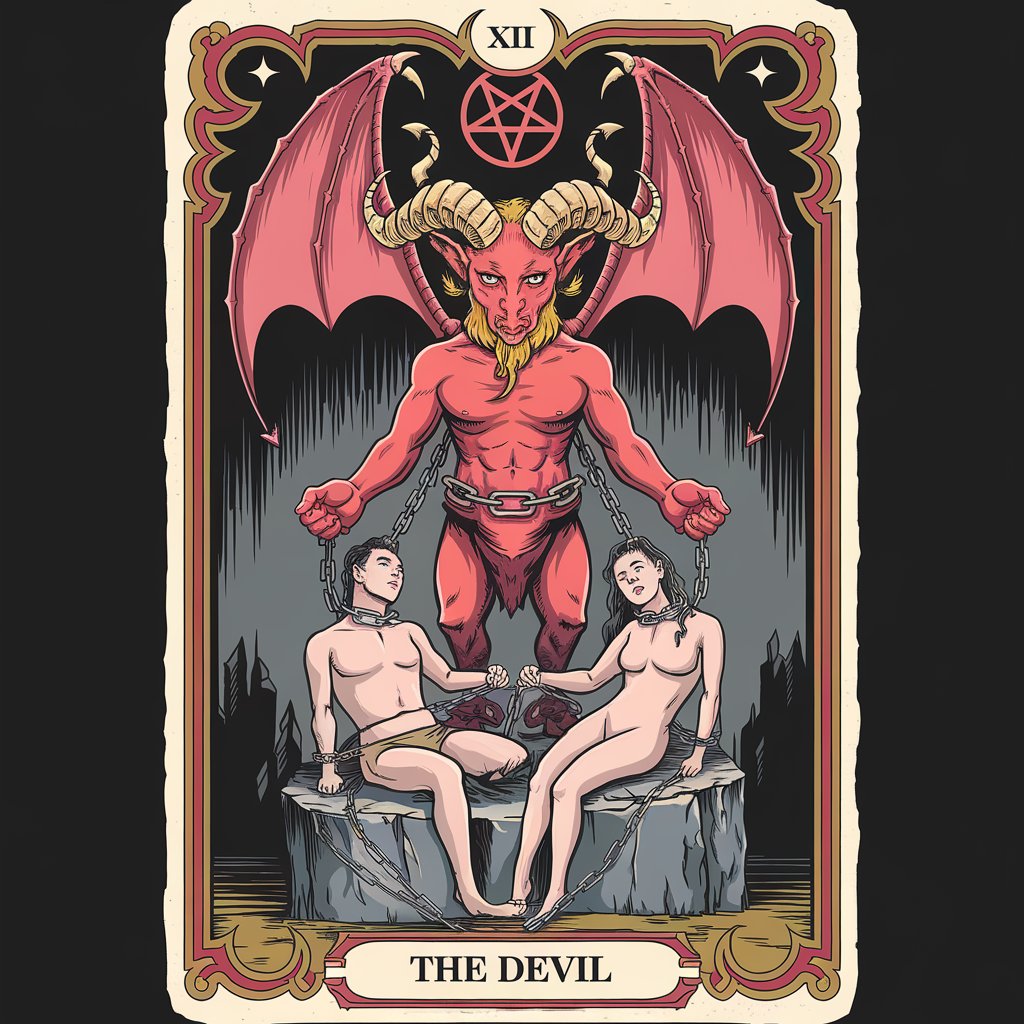
The Devil tarot card represents attachment, dependency, and the illusion of powerlessness. It points to patterns of entanglement—whether emotional, psychological, or relational—where desire, fear, or identity becomes fused with external validation or control. The Devil often highlights unconscious agreements, codependency, and power dynamics rooted in unmet needs or suppressed truths. Rather than signifying external evil, the card reveals how individuals willingly remain bound to situations or roles because they fulfill a deeper craving for security, belonging, or identity. At its core, The Devil asks where autonomy has been exchanged for comfort, and whether love or safety is being sought at the cost of authenticity.
The Helper and The Devil: An Analysis of Their Interaction
When the Enneagram Helper intersects with The Devil tarot card, the focus centers on relational attachment, emotional dependency, and the shadow side of care. This pairing exposes how love, when entangled with fear of abandonment, can become a form of bondage. Four key interaction points emerge:
1. Love as Leverage
Helpers may unconsciously give in order to receive love in return. The Devil reveals how acts of generosity can become transactional—creating invisible contracts where care is exchanged for validation, loyalty, or emotional security. This dynamic binds both the Helper and others into roles that limit genuine intimacy.
2. Fear-Driven Attachment and Codependency
The Devil amplifies the Two’s fear of being unneeded or replaced. This can manifest as clinging, over-functioning, or difficulty allowing others autonomy. The Helper may remain in unbalanced relationships because the role of being indispensable feels safer than facing potential rejection.
3. Suppression of Personal Needs
Twos often disconnect from their own desires to remain focused on others. The Devil highlights how this suppression becomes a form of self-betrayal, leading to resentment, exhaustion, or emotional manipulation when unmet needs finally surface indirectly.
4. Power Dynamics Hidden in Care
Although Helpers often see themselves as selfless, The Devil exposes subtle power dynamics that arise when one person becomes the emotional provider. Control may appear as guilt, obligation, or moral pressure rather than overt dominance—binding relationships through emotional debt rather than mutual choice.
Summary of the Interaction
Together, the Enneagram Helper and The Devil tarot card illuminate how love can become entangled with fear, attachment, and control when worthiness is tied to being needed. This pairing challenges the Helper to examine where generosity masks insecurity and where connection limits freedom. The lesson offered is that true love cannot be sustained through obligation or dependence—it must be chosen freely, with clear boundaries and mutual agency.
The Devil Reversed: Themes and Meaning
The Devil reversed signifies release from unhealthy attachment, the breaking of unconscious relational patterns, and the reclamation of personal autonomy. Where the upright Devil emphasizes entanglement and dependency, the reversed card points to awareness and liberation—recognizing where bonds have been sustained by fear, guilt, or obligation rather than choice. It often appears during periods of relational healing, boundary-setting, or recovery from codependent dynamics. The Devil reversed invites honesty about emotional needs, encourages self-responsibility, and affirms that love does not require self-sacrifice or loss of agency. At its core, it represents freedom through conscious engagement rather than emotional bondage.
The Helper and The Devil Reversed: An Analysis of Their Interaction
When the Enneagram Helper engages with The Devil reversed, the dynamic centers on transforming love from attachment into autonomy. This pairing reflects the Helper’s movement toward self-awareness, balanced care, and emotionally free connection. Four key interaction points define this relationship:
1. Releasing the Need to Be Needed
The Devil reversed challenges the Helper’s unconscious belief that worth is tied to indispensability. As this pattern loosens, the Two begins to recognize that love does not depend on constant giving. This release allows relationships to form around mutual desire rather than emotional necessity.
2. Establishing Healthy Boundaries
Twos often struggle to say no for fear of rejection. The Devil reversed supports the Helper in setting clear emotional and energetic boundaries, understanding that boundaries do not diminish love but protect it. This shift reduces resentment and emotional exhaustion.
3. Reclaiming Suppressed Needs and Desires
Rather than locating fulfillment through others, the Helper begins to reconnect with personal wants, emotions, and bodily signals. The Devil reversed affirms that attending to the self is not selfish but essential for sustainable connection. Desire becomes acknowledged rather than displaced onto others.
4. Transforming Care into Mutual Exchange
In this reversed dynamic, caregiving evolves from self-sacrifice into reciprocity. The Helper learns to receive as freely as they give, allowing relationships to be balanced and co-created. Power imbalances dissolve as emotional responsibility is shared rather than carried alone.
Summary of the Interaction
Together, the Enneagram Helper and The Devil reversed depict the liberation of love from fear-based attachment. This pairing highlights the Helper’s journey from relational over-identification to emotional sovereignty. By releasing the need for validation through giving, embracing boundaries, and honoring personal needs, the Helper transforms connection into a space of mutual freedom. Love, in this context, becomes an expression of choice rather than obligation—deepened through authenticity and balance.