Enneagram Four – The Individualist: Core Traits and World Interaction
The Enneagram Individualist (Type Four) is characterized by emotional depth, sensitivity, creativity, and a strong desire for authenticity. Core traits include introspection, aesthetic awareness, emotional honesty, and a heightened attunement to what is missing or incomplete. Fours are driven by a central desire to understand themselves and to express a unique, meaningful identity. Their core fear is being insignificant, without personal identity, or fundamentally flawed in a way that separates them from others. In their interactions with the world, Individualists often take on the role of artist, outsider, or emotional truth-teller—seeking depth over surface connection and meaning over convention. While this orientation fosters creativity and empathy, it can also lead to envy, moodiness, and a tendency to dwell in emotional pain as proof of authenticity.
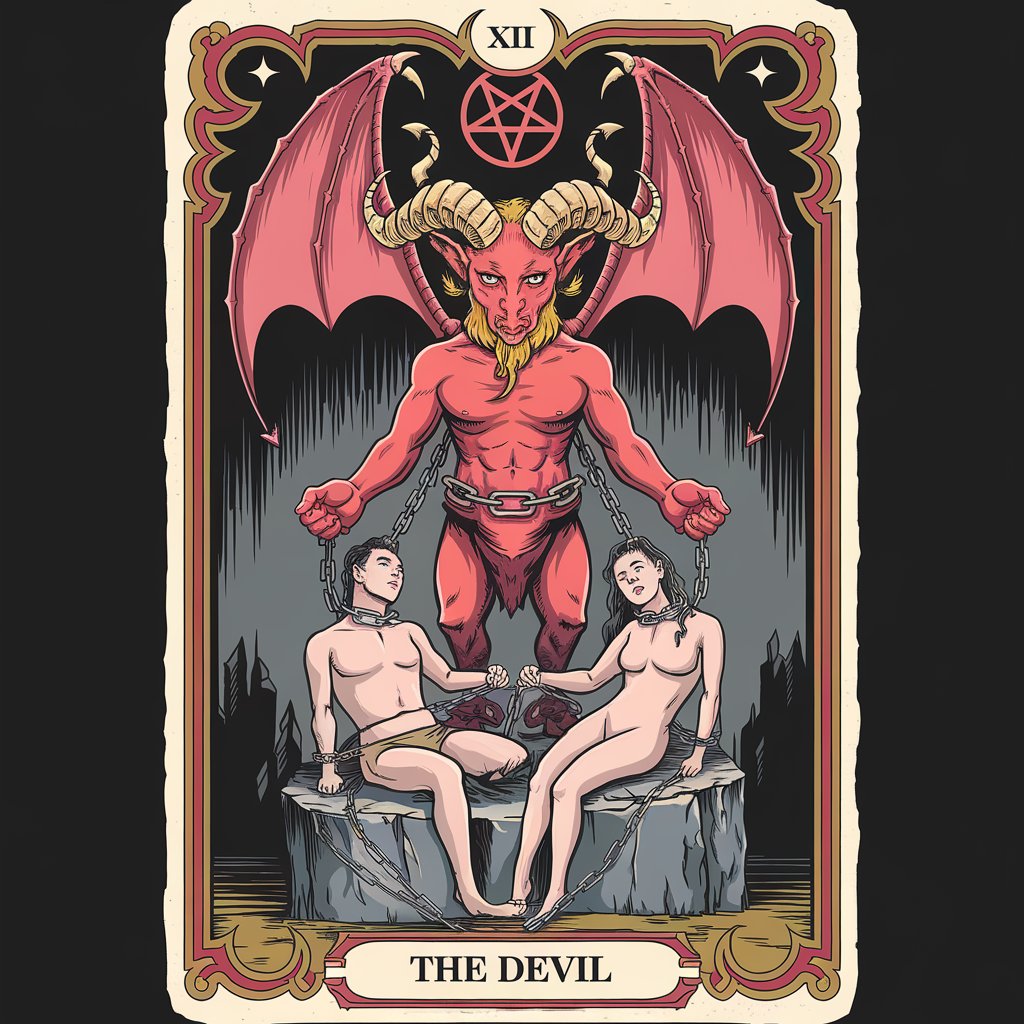
The Devil Tarot Card: Themes and Meaning
The Devil tarot card represents attachment, compulsion, and the illusion that suffering or desire defines identity. It highlights patterns where individuals become bound to emotional states, narratives, or relationships that reinforce a sense of self but limit growth. Often associated with addiction, obsession, and shadow material, The Devil reveals how people unconsciously cling to what is familiar—even when it hurts—because it provides meaning or coherence. Rather than symbolizing external evil, the card exposes internal agreements with pain, shame, or longing that restrict freedom. At its core, The Devil asks where identity has become fused with struggle and whether attachment to suffering is preventing transformation.
The Individualist and The Devil: An Analysis of Their Interaction
When the Enneagram Individualist intersects with The Devil tarot card, the dynamic centers on emotional attachment, identity fixation, and the shadow side of depth. This pairing reveals how meaning can become a form of bondage when suffering is mistaken for authenticity. Four key interaction points emerge:
1. Attachment to Emotional Intensity
Fours often experience emotions vividly and may unconsciously equate intensity with truth. The Devil exposes how clinging to pain, longing, or melancholy can become a self-reinforcing loop—binding identity to emotional suffering rather than allowing movement toward wholeness.
2. Identity Built Around What Is Missing
The Individualist’s focus on absence or deficiency can become a defining narrative. The Devil highlights how this story of “something essential is missing” creates an inner prison, limiting the Four’s ability to recognize present value and connection.
3. Envy and Comparative Self-Bondage
Envy is a core challenge for Type Four. The Devil reveals how constant comparison traps the Individualist in feelings of inferiority or longing, strengthening the belief that fulfillment exists elsewhere or for others—but not for them.
4. Romanticizing the Shadow
Fours are often drawn to shadow material, finding beauty in pain and darkness. The Devil cautions against romanticizing suffering to the point that it becomes an identity anchor. Depth without movement becomes stagnation, and self-expression turns into self-entrapment.
Summary of the Interaction
Together, the Enneagram Individualist and The Devil tarot card illuminate the danger of mistaking emotional bondage for authenticity. This pairing reveals how attachment to suffering, longing, and comparison can limit the Four’s creative and relational freedom. The lesson offered is not to abandon depth, but to release identification with pain—allowing emotional honesty to coexist with joy, connection, and transformation. True individuality emerges not from suffering alone, but from conscious integration of the full emotional spectrum.
The Devil Reversed: Themes and Meaning
The Devil reversed signifies liberation from unconscious attachment, the release of shame or self-limiting narratives, and a reclaiming of personal freedom. Where the upright Devil highlights bondage to desire or suffering, the reversed card reflects awakening—recognizing that the chains of identity, pain, or longing are not absolute. This card often appears during periods of emotional integration, healing, or identity redefinition. The Devil reversed invites the individual to disengage from patterns that once defined them but now restrict growth, encouraging self-acceptance and the integration of shadow without identification with it. At its core, it represents freedom through awareness rather than struggle.
The Individualist and The Devil Reversed: An Analysis of Their Interaction
When the Enneagram Individualist engages with The Devil reversed, the relationship centers on releasing identity-binding emotional patterns and reclaiming wholeness. This pairing reflects a profound shift for the Four—from defining the self through longing or pain to embracing a fuller, more integrated emotional experience. Four key interaction points emerge:
1. Release from Attachment to Suffering
The Devil reversed challenges the Four’s unconscious belief that depth requires pain. As this attachment loosens, emotional honesty remains—but suffering no longer serves as proof of authenticity. The Individualist learns that joy and stability do not diminish depth.
2. Integration of the Shadow Without Identification
Fours are naturally attuned to shadow material. The Devil reversed allows them to acknowledge darkness without romanticizing it. Emotions are experienced, expressed, and released rather than held as identity anchors.
3. Healing Envy Through Self-Acceptance
The reversed Devil softens comparative longing. Instead of focusing on what others have, the Individualist begins to recognize inherent worth and emotional richness already present. Envy transforms into appreciation and self-trust.
4. Authenticity Rooted in Wholeness
Rather than defining authenticity through uniqueness born of pain or absence, the Four begins to express selfhood from a place of completeness. Creativity flows from integration, not fragmentation, allowing deeper and more sustainable connection with others.
Summary of the Interaction
Together, the Enneagram Individualist and The Devil reversed depict emotional liberation and identity integration. This pairing reveals the Four’s movement away from self-definition through suffering toward authenticity grounded in wholeness and self-acceptance. By releasing attachment to pain, integrating shadow material without identification, healing envy, and redefining authenticity, the Individualist discovers that depth and freedom can coexist. Emotional richness becomes a source of vitality rather than a chain.