Enneagram Six – The Loyalist: Core Traits and World Interaction
The Enneagram Loyalist (Type Six) is defined by vigilance, responsibility, and a strong focus on security and trust. Core traits include loyalty, conscientiousness, caution, and a desire to anticipate and prevent problems. Sixes are motivated by a central desire to feel safe, supported, and prepared for potential threats, while their core fear is being unprotected, abandoned, or without guidance. In their interactions with the world, Loyalists often assume roles of advisor, protector, or community anchor—remaining attentive to risks and seeking alignment with trusted authorities or groups. While this orientation fosters reliability, foresight, and communal strength, it can also result in anxiety, indecision, and over-dependence on external structures for reassurance.
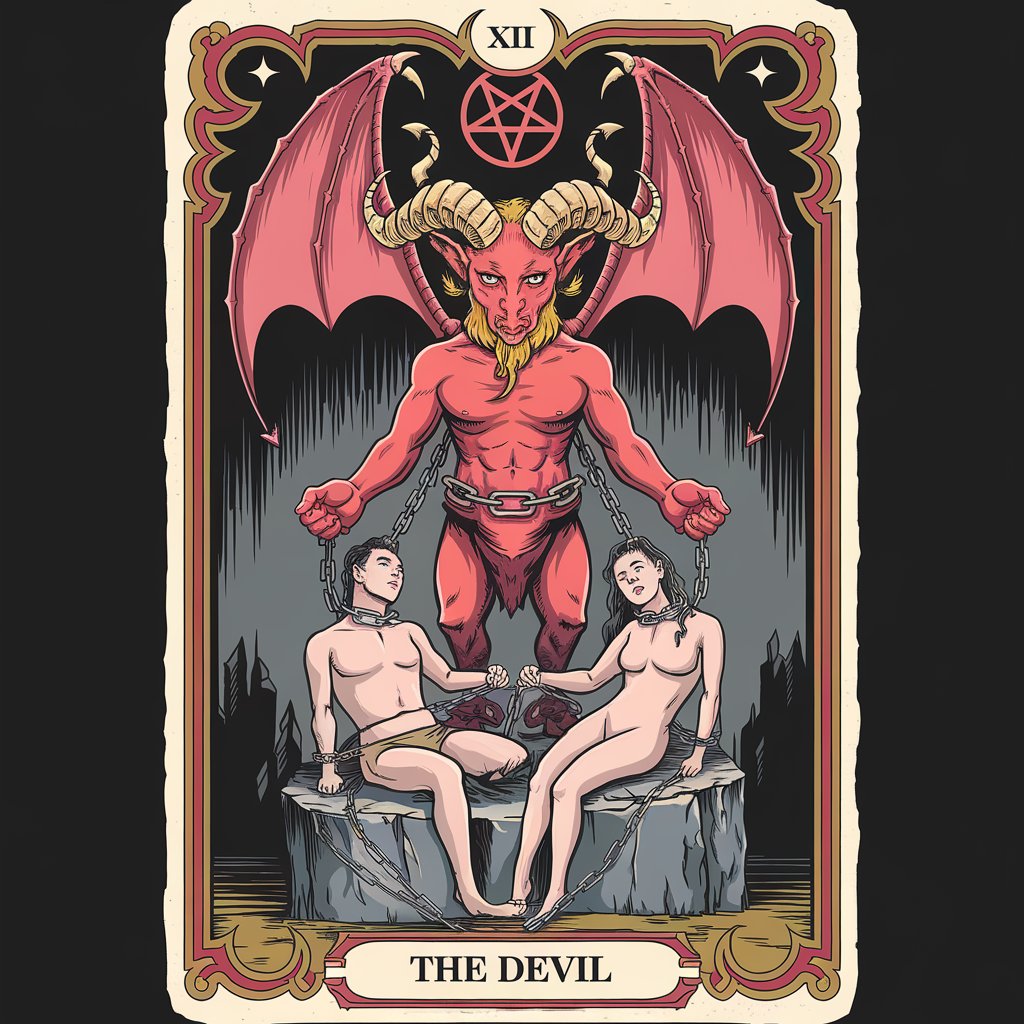
The Devil Tarot Card: Themes and Meaning
The Devil tarot card represents attachment, compulsion, and the illusion of power through fear, desire, or external control. It highlights patterns in which individuals remain bound to limiting behaviors, relationships, or thought processes—even when these patterns are harmful. Associated with dependency, obsession, and shadow dynamics, The Devil exposes the ways people unconsciously trade freedom for perceived security, validation, or comfort. Rather than external evil, the card reveals internal agreements and fears that reinforce limitation. At its core, it asks: Where have you surrendered agency to fear, attachment, or habit, and how can you reclaim it?
The Loyalist and The Devil: An Analysis of Their Interaction
When the Enneagram Loyalist intersects with The Devil tarot card, the dynamic centers on fear, dependency, and over-identification with safety structures. This pairing exposes how security-seeking can become a form of bondage when it is driven by anxiety rather than conscious choice. Four key interaction points emerge:
1. Attachment to Safety and Authority
Sixes naturally seek security through external systems or relationships. The Devil highlights how over-reliance on authority or rigid structures can limit freedom, creating dependency and vulnerability to manipulation.
2. Fear-Based Decision Making
The Devil amplifies the Six’s tendency to act from fear of risk or harm. This can manifest as indecision, avoidance, or overcautious behavior that restricts growth, autonomy, and opportunity.
3. Anxiety as a Self-Perpetuating Chain
Loyalists’ chronic worry can become a cycle of mental bondage. The Devil exposes how ruminative patterns reinforce feelings of entrapment, making it difficult for Sixes to distinguish real threats from imagined ones.
4. Shadow Identification with Duty and Loyalty
Sixes may unconsciously equate worthiness with reliability and obedience. The Devil warns that blind adherence can trap them in roles that serve others’ agendas rather than their own authentic path.
Summary of the Interaction
Together, the Enneagram Loyalist and The Devil tarot card illuminate the shadow of fear, dependency, and self-limitation. This pairing reveals how attachment to safety, authority, and habitual vigilance can create bondage, even when motivated by care or loyalty. The lesson for Sixes is to discern between protective structures and unconscious chains, balancing caution with autonomy, and transforming fear into conscious engagement. True security arises not from external control alone, but from trust in oneself and responsible agency.
The Devil Reversed: Themes and Meaning
The Devil reversed represents liberation from self-imposed limitations, unhealthy attachments, and fear-driven patterns. Whereas the upright Devil highlights bondage to desire, dependency, or compulsion, the reversed card signals awareness and freedom—breaking the chains of internalized anxiety, control, or relational constraint. It encourages conscious trust, self-responsibility, and the courage to disentangle from limiting structures, compulsive worry, or unexamined obligations. At its core, the Devil reversed emphasizes empowerment through conscious choice and the recognition that freedom is possible when one stops reinforcing internal or relational chains.
The Loyalist and The Devil Reversed: An Analysis of Their Interaction
When the Enneagram Loyalist engages with The Devil reversed, the focus is on releasing fear-based dependency and reclaiming agency while maintaining healthy vigilance. Four key interaction points emerge:
1. Liberation from Fear-Based Attachments
The Devil reversed encourages Sixes to loosen their reliance on external authority, systems, or relationships as the sole source of security. Trust shifts inward, allowing loyalty to be chosen rather than compulsive.
2. Reduction of Anxiety and Rumination
Chronic worry can trap the Loyalist in self-imposed cycles of mental bondage. The Devil reversed helps Sixes recognize where fears are projections rather than immediate threats, freeing them from paralysis and indecision.
3. Balanced Trust and Autonomy
Sixes can cultivate trust in themselves while still valuing external guidance. The Devil reversed highlights the possibility of conscious engagement without dependency, integrating caution with courage.
4. Redefining Duty and Loyalty
Rather than equating worth with unquestioning service or adherence, Sixes learn to apply discernment and choose alignment with integrity. Loyalty becomes empowering rather than restrictive.
Summary of the Interaction
Together, the Enneagram Loyalist and The Devil reversed depict liberation from fear-based bonds, compulsive vigilance, and dependency on external validation. This pairing highlights how Sixes can reclaim agency, trust themselves, and act with conscious discernment. By releasing attachment to anxiety, integrating trust with caution, and redefining loyalty, the Loyalist moves from reactive security-seeking to empowered engagement—transforming caution into freedom rather than limitation.