Enneagram Eight – The Challenger: Core Traits and World Interaction
The Enneagram Challenger (Type Eight) is defined by strength, assertiveness, and a drive to maintain control over their environment. Core traits include decisiveness, leadership, protectiveness, and a direct, action-oriented approach to life. Eights are motivated by a central desire to be self-reliant, autonomous, and in control of their circumstances. Their core fear is being harmed, controlled, or vulnerable to exploitation. In their interactions with the world, Challengers often take on roles of leader, protector, or advocate, asserting boundaries and influencing outcomes with confidence. While this orientation fosters empowerment, resilience, and protection of self and others, it can also manifest as domination, rigidity, or aggressive control, particularly when fear of vulnerability drives behavior unconsciously.
The Devil Tarot Card: Themes and Meaning
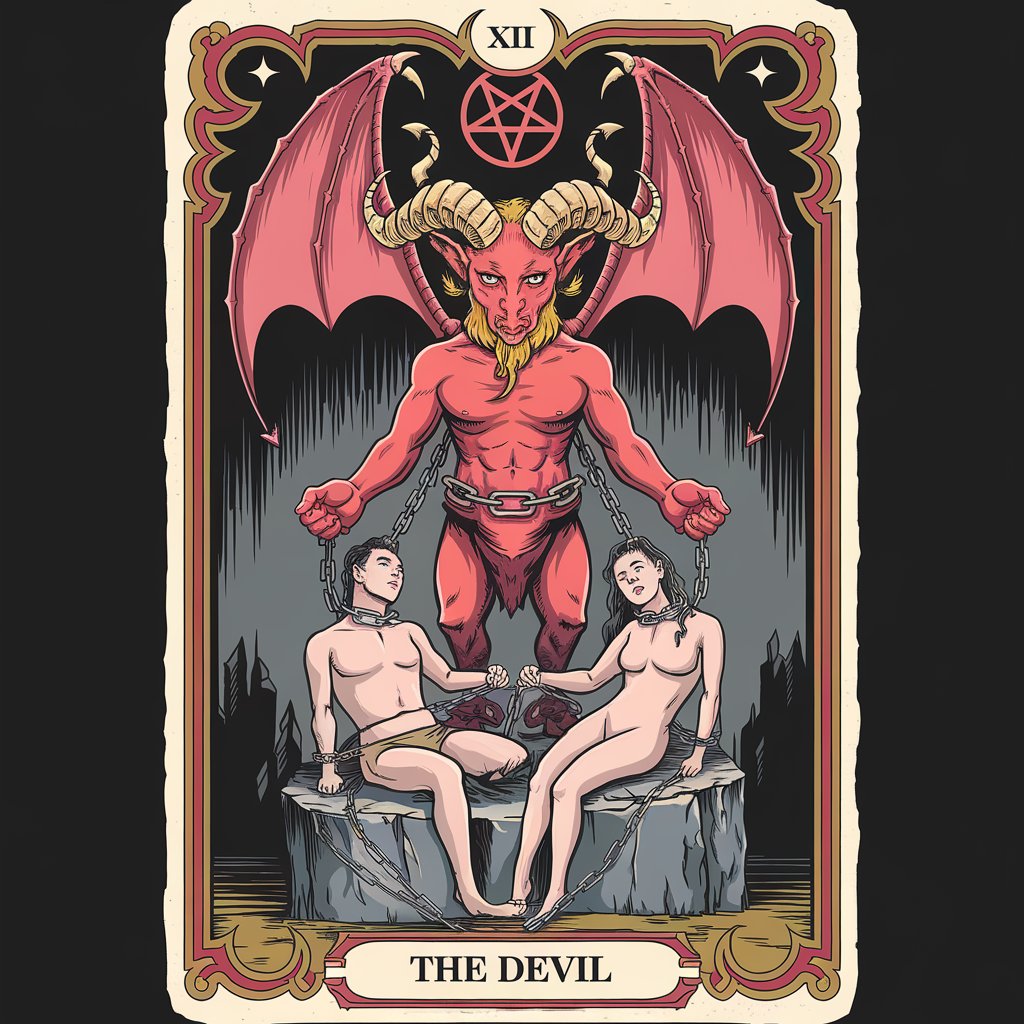
The Devil tarot card represents attachment, compulsion, and bondage to desires, fears, or control. It highlights situations in which power, desire, or fear constrains freedom—often unconsciously. Associated with obsession, addiction, and shadow material, The Devil exposes the ways individuals trade autonomy for perceived security, status, or dominance. Rather than external evil, the card reveals internal agreements that reinforce limitation. At its core, The Devil asks: Where have you surrendered freedom to fear, control, or desire, and how might you reclaim conscious agency?
The Challenger and The Devil: An Analysis of Their Interaction
When the Enneagram Challenger intersects with The Devil tarot card, the dynamic centers on control, power, and attachment to dominance or invulnerability. Four key interaction points emerge:
1. Attachment to Control and Power
Eights often equate strength with freedom. The Devil reveals how over-identification with control can create a cage, binding the Challenger to fear of vulnerability and limiting authentic connection.
2. Fear-Driven Dominance
The Devil highlights how fear of harm, betrayal, or weakness can drive aggressive or coercive behavior. Attachment to this protective strategy can constrain relationships and personal growth.
3. Shadow Identification with Strength
Challengers may define themselves through toughness, assertiveness, and independence. The Devil exposes how this identification can blind them to areas of emotional openness or interdependence.
4. Compulsion Toward External Validation Through Power
Eights can unconsciously seek affirmation via dominance, influence, or material security. The Devil underscores how this external focus may reinforce bondage, as self-worth becomes tethered to others’ acknowledgment.
Summary of the Interaction
Together, the Enneagram Challenger and The Devil tarot card illuminate the shadow side of power, control, and attachment to invulnerability. This pairing shows how strength, when over-identified with protection and dominance, can limit freedom and relational depth. The lesson for Eights is to discern where fear or compulsion drives action, integrate vulnerability into their sense of self, and transform power into conscious choice rather than unconscious bondage. True mastery emerges when autonomy is paired with awareness, flexibility, and authentic connection.
The Devil Reversed: Themes and Meaning
The Devil reversed signifies liberation from compulsion, attachment, and fear-driven behavior. Where the upright Devil emphasizes bondage to control, desire, or external validation, the reversed card reflects awareness, release, and conscious agency. It highlights the ability to disentangle from limiting patterns, reclaim autonomy, and integrate power with self-responsibility. The Devil reversed encourages recognizing where fear or attachment has created self-imposed chains, and choosing freedom, authenticity, and empowered engagement. At its core, it represents the possibility of transforming strength from domination into conscious, liberating power.
The Challenger and The Devil Reversed: An Analysis of Their Interaction
When the Enneagram Challenger engages with The Devil reversed, the dynamic focuses on releasing fear-driven control and integrating authentic power. Four key interaction points emerge:
1. Liberation from Fear-Based Control
The reversed Devil encourages Eights to loosen attachment to dominance and external authority as a way to feel safe. Vulnerability becomes a conscious choice rather than a threat to power.
2. Integration of Strength and Compassion
Eights often prioritize assertiveness and toughness. The Devil reversed supports using power responsibly and empathetically, allowing leadership to include nurturing and collaboration.
3. Release from Over-Identification with Authority
Challengers may define themselves through control, influence, or toughness. The Devil reversed signals that identity can coexist with flexibility and relational awareness, freeing them from rigid self-concepts.
4. Conscious Use of Autonomy and Power
Rather than seeking external validation through dominance or fear-driven action, the reversed Devil emphasizes acting from aligned principles, choice, and conscious engagement with responsibility.
Summary of the Interaction
Together, the Enneagram Challenger and The Devil reversed depict liberation from fear, compulsion, and over-identification with power. This pairing shows how strength can evolve from control-driven action into conscious, authentic leadership. By releasing fear-based dominance, integrating compassion with assertiveness, disentangling identity from control, and exercising power mindfully, the Eight transforms personal autonomy into freedom and empowerment, rather than bondage or limitation.