Enneagram One — The Reformer: Core Traits and Worldview
The Enneagram Reformer is guided by a strong internal sense of ethics, responsibility, and improvement. Ones strive to refine both themselves and their environment, often acting from a desire to uphold integrity and create meaningful change. Their core desire is to be good, balanced, and principled, while their underlying fear revolves around being flawed, corrupt, or morally wrong. In the world, Reformers tend to become organizers, advocates, and steady forces who bring structure and accountability to situations. However, their pursuit of perfection can lead to tension, emotional restraint, and frustration when reality fails to meet their high standards.
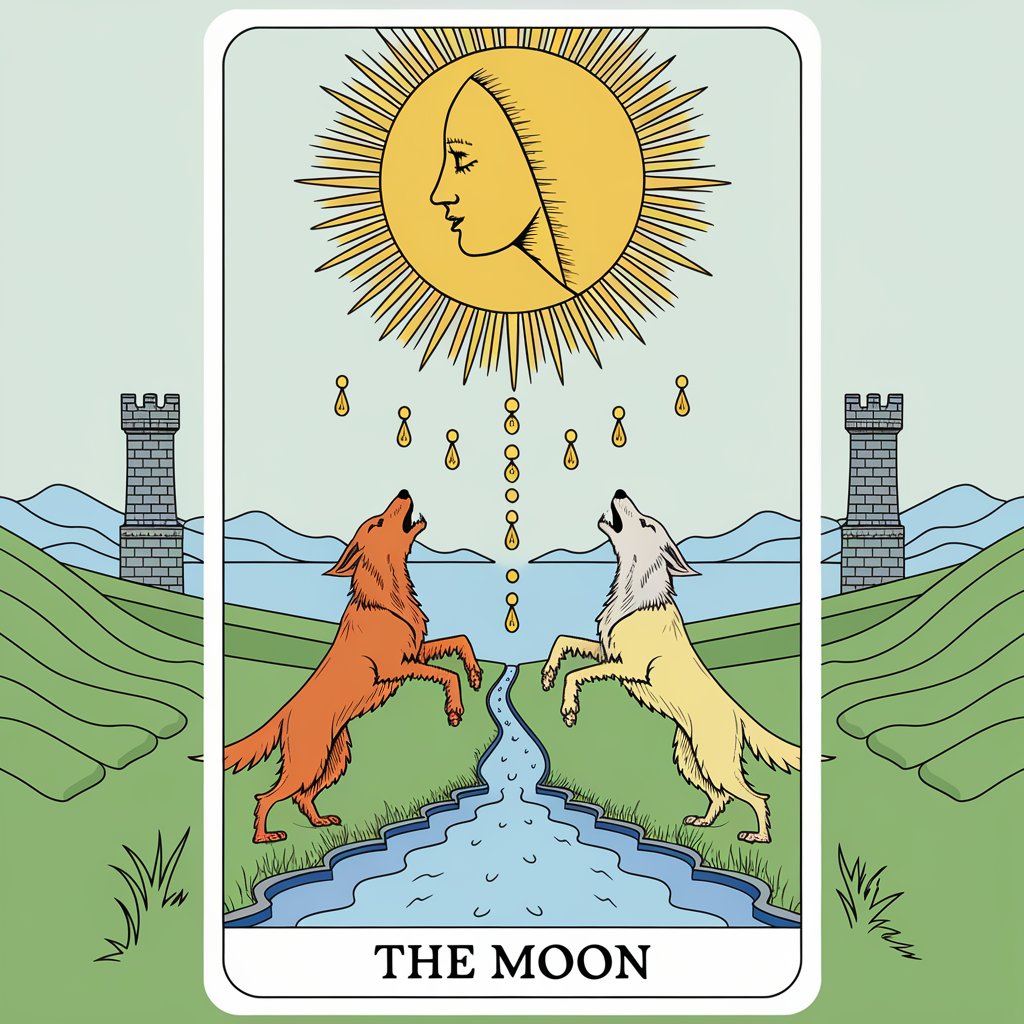
The Moon — Key Themes and Meaning
The Moon tarot card represents the realm of intuition, dreams, and the subconscious. It illuminates uncertainty rather than clarity, inviting the seeker to navigate hidden emotions, illusions, and shifting perceptions. This archetype speaks to liminal spaces where logic cannot fully guide the way, emphasizing instinct, imagination, and emotional depth. The Moon can indicate confusion or anxiety when its shadows dominate, yet it also offers profound inner awareness and transformation when one learns to trust the unseen path. Ultimately, the card reflects the journey of moving through mystery with vulnerability and openness rather than control.
Analysis — The Reformer Through the Lens of The Moon
- Structure Meets Ambiguity:
The Reformer’s need for order and moral clarity is challenged by the Moon’s shifting and uncertain terrain. This interaction pushes Ones to recognize that not all truths can be neatly categorized, encouraging growth through flexibility rather than rigid certainty. - The Inner Critic and the Subconscious:
The Moon surfaces hidden fears and emotional undercurrents, confronting the Reformer’s inner critic. Instead of suppressing uncomfortable feelings, Ones are invited to explore them with curiosity, allowing emotional authenticity to soften self-judgment. - Learning to Trust Intuition:
While Reformers often rely on principles and logic, the Moon asks them to listen to instinct and inner knowing. This balance between ethical structure and intuitive awareness expands their decision-making beyond strict right-and-wrong thinking. - Compassion Through Complexity:
The Moon introduces shades of gray into the Reformer’s worldview, encouraging empathy for both self and others. By embracing complexity, Ones evolve from perfectionism into wise discernment, recognizing that growth often unfolds in uncertain spaces.
Summary of the Interaction:
When the Reformer walks beneath the Moon’s light, discipline merges with vulnerability. This pairing suggests a path where ethical strength deepens through emotional awareness, transforming rigid idealism into compassionate clarity grounded in both intuition and principle.
The Moon Tarot Card — Reversed Meaning and Themes
When The Moon appears reversed, its themes shift from confusion and illusion toward revelation, emotional clarity, and the slow lifting of subconscious fog. Hidden fears begin to surface where they can be examined rather than avoided, and intuition becomes less distorted by projection or anxiety. The reversed Moon often signals a process of confronting inner shadows, dissolving misperceptions, and reclaiming personal truth after a period of uncertainty. Instead of being lost in illusion, the seeker starts to see through deception — including self-deception — allowing emotional reality to become more grounded and manageable. However, this process can feel vulnerable, as long-suppressed feelings and subconscious patterns move into conscious awareness.
Analysis — How the Enneagram Reformer Relates to The Moon Reversed
- From Moral Certainty to Emotional Honesty
Reformers tend to rely on logic, ethics, and structured thinking, while The Moon reversed invites them to acknowledge emotional ambiguity. This interaction challenges the Reformer to balance their need for certainty with the acceptance that emotional truth is often complex rather than perfectly ordered. - Releasing Inner Criticism Through Awareness
The reversed Moon reveals hidden anxieties and subconscious fears — many of which mirror the Reformer’s inner critic. As illusions dissolve, the Reformer may realize that some of their harsh self-judgment is rooted in fear rather than genuine ethical failure, allowing compassion to replace rigidity. - Integrating Intuition with Principle
Reformers typically prioritize reason over instinct, but The Moon reversed encourages them to trust intuitive insights once emotional distortions clear. This creates a more holistic decision-making process where instinct and principle work together instead of competing. - Transforming Control into Self-Understanding
Where a Reformer might attempt to control uncertainty, the reversed Moon teaches that clarity emerges through introspection rather than perfectionism. By confronting subconscious patterns, the Reformer evolves from enforcing external order to cultivating internal balance.
Summary:
Together, the Enneagram Reformer and The Moon reversed form a dynamic of internal purification — moving from rigid moral control toward compassionate self-awareness. Emotional truths rise to the surface, dissolving illusion and allowing the Reformer to refine not just the outer world, but their inner landscape as well.