Enneagram One – The Reformer: Core Traits and World Interaction
The Enneagram Reformer (Type One) is driven by a deep internal compass oriented toward integrity, improvement, and moral correctness. Core traits include conscientiousness, idealism, discipline, and a strong sense of responsibility. Ones possess an acute awareness of imperfection—both within themselves and in the world—and feel compelled to correct what is flawed. Their core desire is to be good, virtuous, and aligned with an inner sense of truth. Conversely, their core fear is being corrupt, wrong, or morally defective. In their interactions with the world, Reformers often take on the role of improvers, critics, or ethical stewards. While their intentions are rooted in care and justice, they may struggle with rigidity, self-judgment, suppressed anger, and an unconscious belief that worthiness must be earned through right action and self-control.
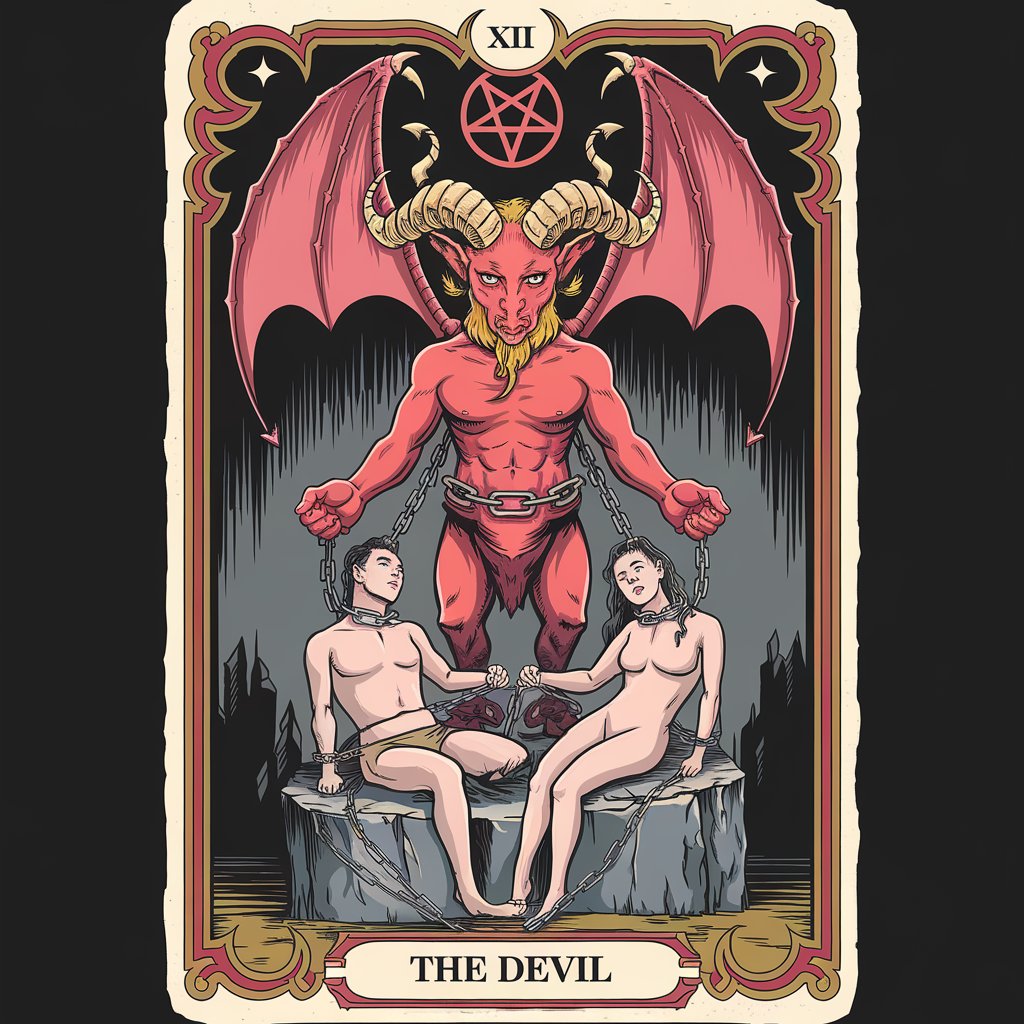
The Devil Tarot Card: Themes and Meaning
The Devil tarot card represents bondage, attachment, and the illusion of powerlessness. It speaks to patterns of addiction, compulsion, shame, and unconscious conditioning that keep individuals trapped in cycles of suffering. Often misunderstood as purely negative, The Devil does not signify external evil but rather internal enslavement—where fear, desire, or identity becomes so fused with the self that freedom feels impossible. The card highlights shadow material: repressed instincts, taboo desires, and unhealthy power dynamics. At its core, The Devil asks the question: What are you giving your power to, and why? It invites awareness, accountability, and the recognition that the chains binding us are often looser than we believe.
The Reformer and The Devil: An Analysis of Their Interaction
When the Enneagram Reformer intersects with The Devil tarot card, the tension centers on control, repression, and moral bondage. This relationship reveals how virtue can become a cage when fear replaces wisdom. Four key interaction points emerge:
1. Internalized Control as Bondage
Reformers often internalize strict rules about what is acceptable, “good,” or pure. The Devil exposes how this inner rigidity can become a form of self-imposed imprisonment. Rather than external temptation, The Devil manifests as an unforgiving inner critic that denies the Reformer rest, pleasure, or emotional expression.
2. Repression of Instinct and Desire
The Devil governs instinct, desire, and the shadow self—areas that Type Ones may suppress in pursuit of moral excellence. This repression can paradoxically strengthen the shadow, leading to guilt, compulsive behaviors, or hidden resentments. The card challenges the Reformer to integrate desire consciously rather than deny it.
3. Shame and Moral Perfectionism
For the Reformer, shame often arises from the belief that imperfection equals failure of character. The Devil amplifies this dynamic by highlighting how shame itself becomes the chain—keeping the One stuck in cycles of self-correction without self-compassion. The lesson here is that moral worth is not diminished by humanity.
4. Liberation Through Awareness and Choice
The Devil ultimately offers liberation through conscious choice. For the Reformer, freedom comes from recognizing that ethics rooted in fear are not true integrity. By loosening rigid self-judgment and allowing nuance, the One reclaims agency and transforms moral discipline into conscious alignment rather than compulsion.
Summary of the Interaction
Together, the Enneagram Reformer and The Devil tarot card illuminate the shadow side of righteousness: how the pursuit of goodness can devolve into bondage when driven by fear and shame. This pairing teaches that true reform arises not from repression or punishment, but from integration, awareness, and self-forgiveness. When the Reformer learns to release internal chains, their moral clarity becomes expansive rather than constricting—transforming The Devil from a jailer into a teacher.
The Devil Reversed: Themes and Meaning
The Devil reversed represents liberation from bondage, the dissolution of unhealthy attachments, and the reclaiming of personal power. Where the upright Devil emphasizes entrapment and unconscious patterns, the reversed Devil signals awakening—an increased awareness of internalized limitations, shame, or compulsions, and a willingness to release them. This card often appears during periods of deconditioning, recovery, or moral reckoning, when an individual recognizes that the chains once believed to be permanent were self-imposed or no longer necessary. The Devil reversed invites conscious choice, self-forgiveness, and the integration of the shadow rather than its suppression. It speaks to freedom earned through honesty and responsibility rather than denial.
The Reformer and The Devil Reversed: An Analysis of Their Interaction
When the Enneagram Reformer engages with The Devil reversed, the dynamic shifts from control to conscious liberation. This pairing reflects the moment when moral discipline evolves into moral wisdom, and self-correction gives way to self-trust. Four key interaction points define this relationship:
1. Release from the Inner Critic
The Reformer’s internal judge—often harsh and unrelenting—begins to loosen its grip under the influence of The Devil reversed. Rather than being driven by fear of wrongdoing, the One starts to discern which rules are truly aligned with their values and which are inherited, outdated, or punitive. This release allows integrity to become a choice rather than an obligation.
2. Integration of Desire Without Shame
The Devil reversed encourages the Reformer to acknowledge instinct, pleasure, and desire without equating them to moral failure. Instead of suppressing impulses, the One learns to integrate them consciously, recognizing that desire itself is not corrupt—only unconscious or unexamined desire causes harm. This creates a healthier relationship with the body and emotional life.
3. Transformation of Perfectionism into Discernment
Perfectionism often binds the Reformer to rigid standards that leave little room for humanity. In this reversed dynamic, perfectionism softens into discernment—an ability to evaluate situations ethically without absolutism. The One becomes more flexible, compassionate, and effective in the world, acting from principle rather than compulsion.
4. Ethical Authority Through Freedom, Not Fear
The Devil reversed restores agency. For the Reformer, this means ethical leadership rooted in freedom rather than fear of error. Their moral voice gains credibility and warmth because it is no longer fueled by self-denial or shame, but by lived experience and conscious choice. Reform becomes invitational rather than corrective.
Summary of the Interaction
Together, the Enneagram Reformer and The Devil reversed depict the liberation of morality from fear-based control. This pairing reveals how true integrity emerges when internalized chains—shame, rigid rules, and self-punishment—are consciously released. The Reformer evolves from a figure of restraint into one of ethical embodiment, demonstrating that goodness sustained by freedom is more powerful than goodness enforced by fear.