Enneagram Two — The Helper
The Enneagram Helper is oriented toward connection, generosity, and emotional attunement. Core traits include warmth, empathy, intuition about others’ needs, and a strong relational focus. Their central desire is to be loved, appreciated, and needed, while their core fear is being unwanted, unworthy of love, or emotionally abandoned. Helpers often derive identity through service and care, instinctively moving toward others to offer support, reassurance, or guidance. In their interactions with the world, Twos tend to build networks of mutual reliance, but may struggle with blurred boundaries, people-pleasing, or hidden expectations of reciprocity when their giving goes unacknowledged.
The Tower — Tarot Card Overview
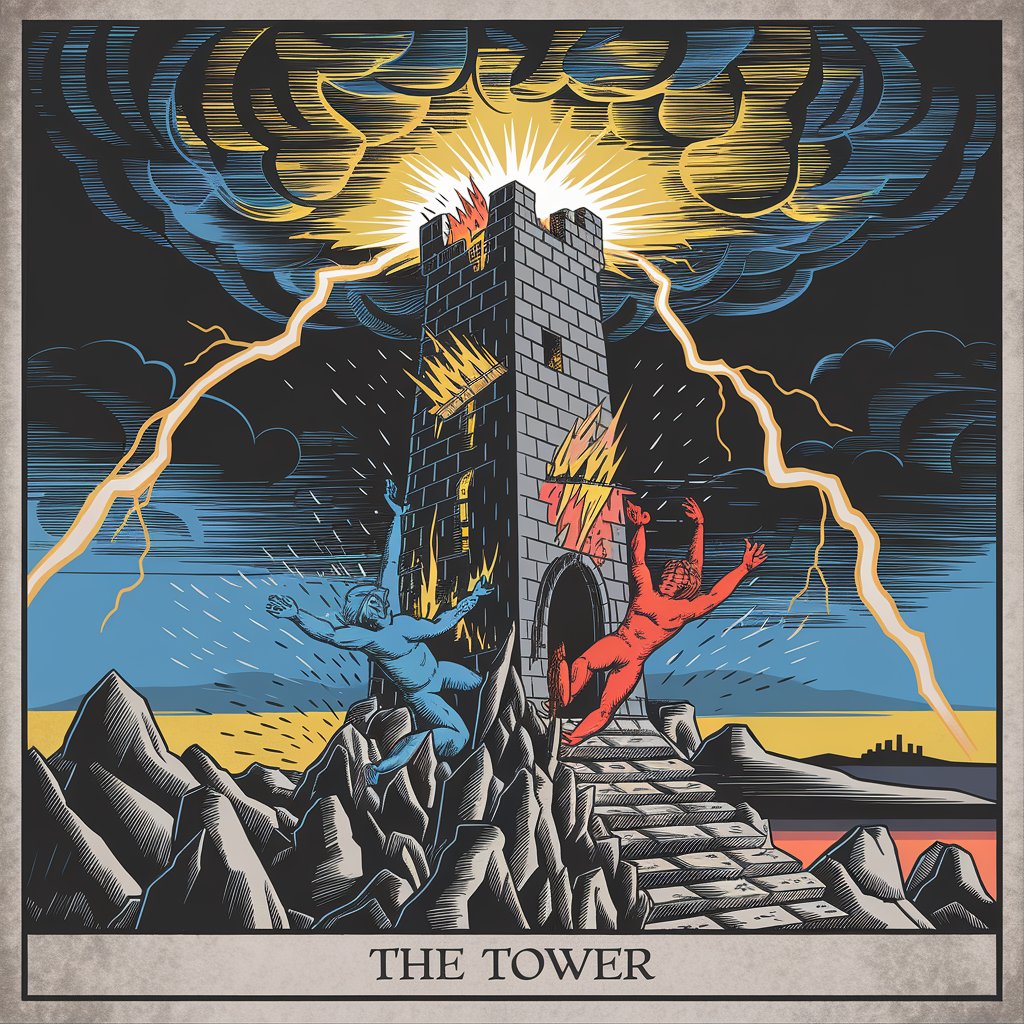
The Tower represents sudden upheaval, disruption, and the collapse of structures that are no longer sustainable. It signifies moments when illusions are shattered, false foundations are exposed, and forces beyond personal control dismantle what once felt stable or secure. Though often experienced as shocking or painful, The Tower ultimately serves liberation, clearing away distortions so that truth can emerge. This card points to awakening through rupture, the exposure of hidden imbalances, and the necessity of breakdown before authentic rebuilding can occur.
The Helper and The Tower — Integrated Analysis
When The Tower intersects with the Enneagram Helper, it often signals a relational or emotional collapse that exposes the cost of over-giving and unmet needs. This interaction unfolds through several key dynamics:
- Collapse of the Caretaking Identity
The Tower disrupts the Helper’s self-concept as indispensable. Relationships or roles may abruptly end or shift, revealing that worth cannot be sustained solely through usefulness or service. - Exposure of Hidden Needs and Expectations
The Helper’s unspoken desires for appreciation, reciprocity, or closeness are brought to light. The Tower forces recognition of emotional debts that were never consciously negotiated. - Boundary Breakdown and Emotional Shock
Twos often maintain connection by minimizing their own limits. The Tower breaks this pattern, sometimes through burnout, rejection, or conflict, demanding clearer boundaries and self-recognition. - Reconstruction of Love on Authentic Ground
After the fall, the Helper is invited to rebuild relationships based on mutuality rather than sacrifice. The Tower clears relational illusions so that care can flow in both directions.
Summary of the Interaction
Together, The Helper and The Tower describe a transformational reckoning: the collapse of overidentification with being needed, the revelation of suppressed personal needs, the painful enforcement of boundaries, and the opportunity to reconstruct love through authenticity rather than self-erasure. This pairing ultimately liberates the Helper to experience connection without dependency.
The Tower (Reversed) — Tarot Card Overview
The Tower reversed represents resistance to upheaval, delayed collapse, and the suppression of necessary change. Instead of sudden external disruption, it points to internalized instability, denial, or the attempt to hold together structures that are already fractured. This card often reflects fear of loss, avoidance of confrontation, and the maintenance of false stability through emotional or psychological strain. While the reversed Tower may prevent immediate chaos, it typically intensifies internal pressure, signaling that truth and transformation are being postponed rather than embraced.
The Helper and The Tower Reversed — Integrated Analysis
When the reversed Tower intersects with the Enneagram Helper, the dynamic centers on relational preservation at personal cost. Rather than allowing relationships or roles to transform or end, the Helper absorbs strain to keep connections intact. This interaction expresses itself through several key themes:
- Endurance of Unsustainable Relationships
The Helper resists relational collapse, remaining emotionally invested long after mutuality has eroded. The reversed Tower reflects the choice to stabilize others rather than acknowledge that a connection is no longer viable. - Suppression of Personal Needs
Instead of allowing emotional truth to disrupt the relationship, the Helper minimizes or ignores their own needs. This internalization of strain preserves surface harmony while deepening internal depletion. - Fear-Driven Avoidance of Conflict or Loss
The reversed Tower mirrors the Helper’s fear of abandonment, motivating them to avoid confrontation or endings. Love becomes something to manage and maintain rather than experience honestly. - Delayed Transformation of Love and Self-Worth
By postponing necessary rupture, the Helper delays growth. True transformation—learning to receive, to set boundaries, and to define worth beyond usefulness—remains inaccessible until collapse is consciously permitted.
Summary of the Interaction
Together, the Helper and the Tower reversed describe the quiet preservation of unstable bonds, the internalization of emotional collapse, the silencing of personal needs, and the postponement of relational truth. This pairing warns that love maintained through self-erasure ultimately undermines both connection and self-worth, and that genuine intimacy requires the courage to allow what no longer serves to fall.