Enneagram Four — The Individualist
The Enneagram Individualist is defined by emotional depth, self-awareness, and a focus on authenticity and uniqueness. Core traits include introspection, creativity, sensitivity, and a nuanced understanding of personal and relational dynamics. Their central desire is to find identity, significance, and emotional authenticity, while their core fear is being insignificant, mundane, or emotionally disconnected. Fours often experience the world through the lens of feeling and identity, seeking to differentiate themselves while cultivating meaningful connections. In interactions with the world, Individualists express artistry, emotional insight, and empathy, but they may struggle with envy, melancholy, or withdrawal when reality fails to align with their inner ideals.
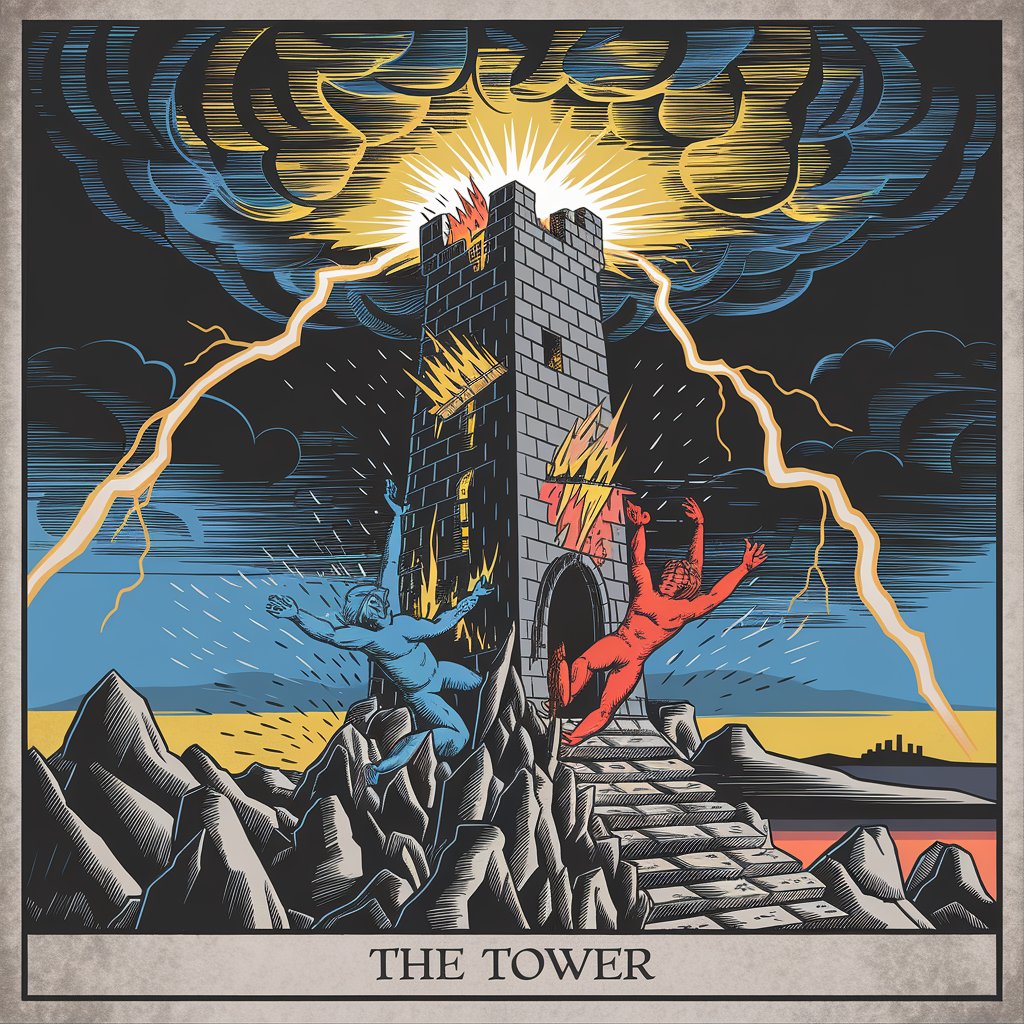
The Tower — Tarot Card Overview
The Tower represents sudden upheaval, disruption, and the destruction of structures that are false or unsustainable. It signifies moments when illusions are shattered, hidden truths are revealed, and foundations built on misconception collapse. Though experienced as shocking, disorienting, or painful, The Tower serves liberation, clearing away distortion to allow authentic rebuilding. This card emphasizes awakening through rupture, exposure of hidden vulnerabilities, and the necessity of breakdown before true transformation. Its energy invites confrontation with what has been avoided or denied, fostering growth through honesty and radical change.
The Individualist and The Tower — Integrated Analysis
When The Tower intersects with the Enneagram Individualist, it catalyzes a profound reevaluation of self, identity, and emotional attachments. This interaction manifests through several key dynamics:
- Shattering of Identity Constructs
The Tower disrupts the Individualist’s carefully curated self-image or personal narrative, challenging attachment to ideals, roles, or emotional personas. - Exposure of Hidden Vulnerabilities
Fours may encounter sudden revelations about their emotional patterns, dependencies, or unexamined beliefs, prompting deep introspection and self-awareness. - Emotional Upheaval and Release
The Tower can trigger intense emotional shifts, forcing the Individualist to confront grief, envy, or longing that has been contained or romanticized. - Opportunity for Authentic Rebuilding
Following collapse, the Individualist is invited to reconstruct identity and relationships on a foundation of authenticity rather than attachment to idealized images or past narratives.
Summary of the Interaction
Together, the Individualist and The Tower describe the disruption of self-concept, exposure of hidden emotional truths, intense emotional upheaval, and the opportunity to rebuild identity with authenticity. This pairing encourages Fours to release attachment to illusions of self and embrace transformation through the honest acknowledgment of vulnerability and uniqueness.
The Tower (Reversed) — Tarot Card Overview
The Tower reversed signifies resistance to change, postponed upheaval, and internalized instability. Unlike the upright Tower, which shatters structures abruptly, the reversed Tower represents clinging to fragile foundations, avoiding disruption, or attempting to hold together what is already unsustainable. While external chaos may be minimized, internal pressure, tension, and fear of loss increase. This card reflects denial, fear of exposing vulnerability, and postponement of necessary transformation, emphasizing the need to confront reality consciously before authentic rebuilding can occur.
The Individualist and The Tower Reversed — Integrated Analysis
When the reversed Tower intersects with the Enneagram Individualist, the interaction centers on internalized emotional collapse and resistance to self-revelation. Instead of experiencing a sudden identity-shattering event, the Four may maintain fragile self-concepts and idealized narratives at personal cost. Key dynamics include:
- Clinging to Idealized Identity
The Individualist resists letting go of emotionally charged self-images, holding onto identity constructs rather than allowing authentic transformation to occur. - Internalized Emotional Tension
Instead of outward upheaval, Fours absorb the pressure internally, heightening feelings of melancholy, envy, or frustration while avoiding confrontation with their inner truth. - Suppression of Vulnerability
The reversed Tower reflects the Individualist’s tendency to hide true emotions or maintain a composed persona, delaying honest engagement with feelings and relationships. - Delayed Opportunity for Authentic Growth
By resisting the breakdown of false narratives, the Four postpones self-realization and the reconstruction of identity on a foundation of genuine emotional truth.
Summary of the Interaction
Together, the Individualist and the reversed Tower describe the internal preservation of fragile identity, heightened emotional tension, suppression of vulnerability, and postponed self-transformation. This pairing highlights the psychological cost of resisting change and underscores the need for conscious surrender to release illusions and reconnect with authentic selfhood.