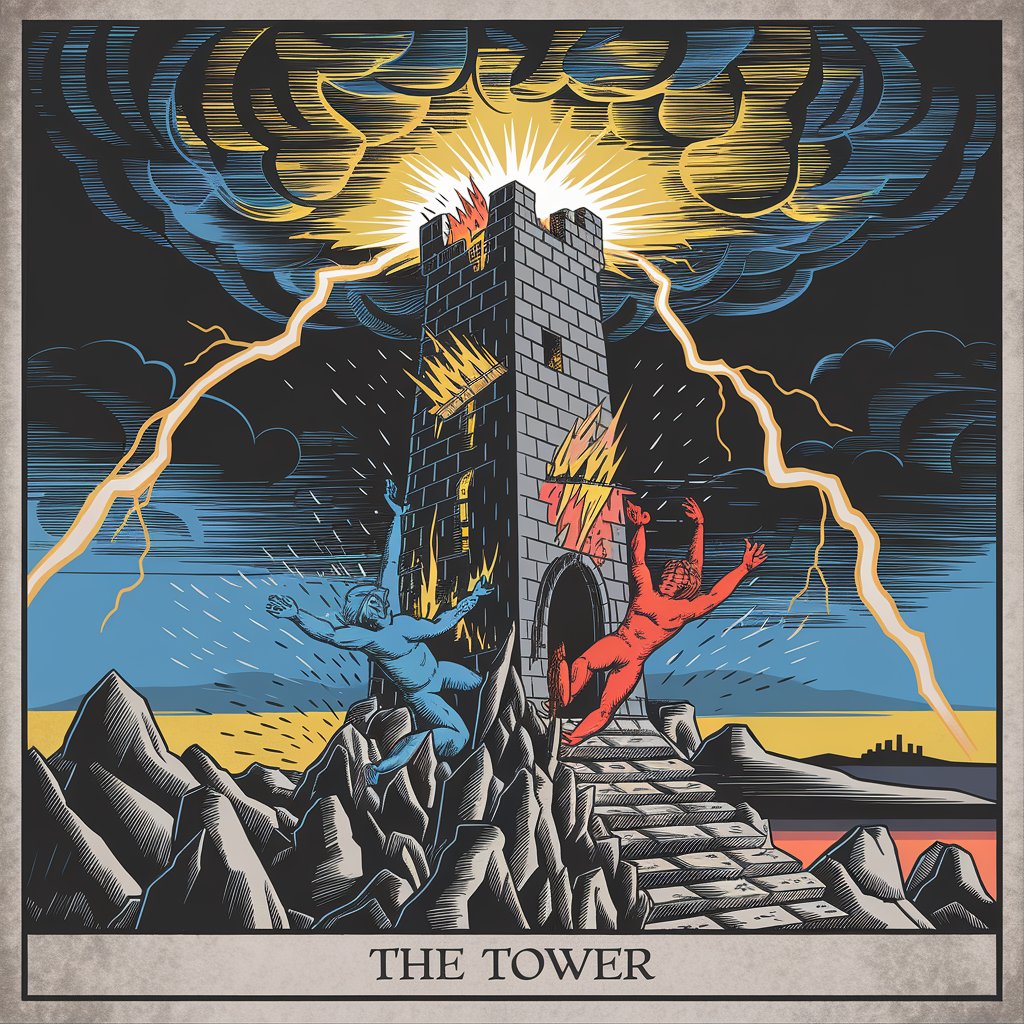
The Tower (Reversed) — Tarot Card Overview
The Tower reversed signifies avoidance of upheaval, internalized tension, and delayed confrontation with necessary disruption. Rather than sudden external collapse, it reflects clinging to fragile structures, denial of hidden instability, or attempts to maintain control despite cracks in the foundation. The reversed Tower often produces internal pressure, heightened anxiety, and fear of exposure, suggesting that avoidance postpones growth. It warns that truth and transformation are being deferred, emphasizing the psychological cost of resisting necessary change and the need for conscious engagement to prevent eventual collapse.
The Investigator and The Tower Reversed — Integrated Analysis
When the reversed Tower intersects with the Enneagram Investigator, the dynamic centers on postponed reckoning and internalized pressure. Instead of a sudden external shock, Fives absorb instability internally, attempting to maintain control and certainty. Key dimensions of this interaction include:
- Clinging to Knowledge as a Defense
The Investigator may over-rely on intellectual frameworks to prevent disruption, using analysis to avoid confronting emotional or practical instability. - Internalized Stress and Anxiety
Instead of external upheaval, tension builds inside. Fives may experience mental overload, worry, or obsessive planning in an attempt to preserve fragile security. - Suppression of Vulnerability
The reversed Tower mirrors the Investigator’s tendency to hide uncertainty, doubt, or emotional needs, delaying self-awareness and authentic engagement with reality. - Delayed Opportunity for Integrative Growth
By avoiding external or internal disruption, the Five postpones the chance to rebuild understanding in a more holistic, emotionally aware, and adaptable way.
Summary of the Interaction
Together, the Investigator and the Tower reversed describe the preservation of fragile intellectual structures, internalized stress, suppression of vulnerability, and postponed transformation. This pairing highlights the hidden costs of resisting upheaval and suggests that true competence and security emerge only when Fives consciously allow disruption and integrate both emotional and practical realities.
The Tower (Reversed) — Tarot Card Overview
The Tower reversed represents avoidance of disruption, delayed collapse, and internalized tension. Rather than sudden destruction, it reflects attempts to maintain stability despite cracks in the foundation, clinging to structures, or denying necessary change. It highlights fear of exposure, postponed reckoning, and anxiety that accumulates beneath the surface. While it may reduce external chaos temporarily, the reversed Tower increases internal strain, signaling that transformation is deferred and that avoidance carries psychological and practical costs.
The Loyalist and The Tower Reversed — Integrated Analysis
When the reversed Tower intersects with the Enneagram Loyalist, it manifests as delayed confrontation with instability and heightened internal anxiety. Sixes attempt to maintain security, often at the expense of growth or authenticity. Key dynamics include:
- Clinging to Structures and Authority
The Loyalist may resist necessary upheaval by leaning heavily on rules, systems, or trusted authorities, even when these structures are flawed or unsustainable. - Internalized Anxiety and Hyper-Vigilance
Instead of external disruption, tension builds internally. The Six may overthink worst-case scenarios, anticipate collapse, or become paralyzed by indecision. - Suppression of Instinctual Reactions
The reversed Tower mirrors the Loyalist’s tendency to suppress gut instincts or discomfort to maintain perceived stability, delaying adaptive action. - Postponed Opportunity for Resilient Growth
By avoiding the natural dismantling of outdated structures, Sixes delay the chance to cultivate true resilience, adaptability, and self-trust.
Summary of the Interaction
Together, the Loyalist and the Tower reversed describe the preservation of insecure structures, internalized anxiety, suppression of instinct, and postponed growth. This pairing highlights that avoiding upheaval may feel protective, but it intensifies internal strain and delays the development of authentic resilience and security.