Enneagram Nine – The Peacemaker: Core Traits and World Interaction
The Enneagram Peacemaker (Type Nine) is defined by a desire for harmony, stability, and internal and external peace. Core traits include adaptability, patience, empathy, and a tendency to minimize conflict. Nines are motivated by a central desire to feel connected, at peace, and comfortable, while their core fear is conflict, disconnection, or being overlooked. In their interactions with the world, Peacemakers often take on the role of mediator, stabilizer, or supporter, prioritizing others’ needs and maintaining calm. While this orientation fosters empathy, cohesion, and tolerance, it can also lead to passivity, avoidance of difficult emotions, and unconscious attachment to comfort or complacency.
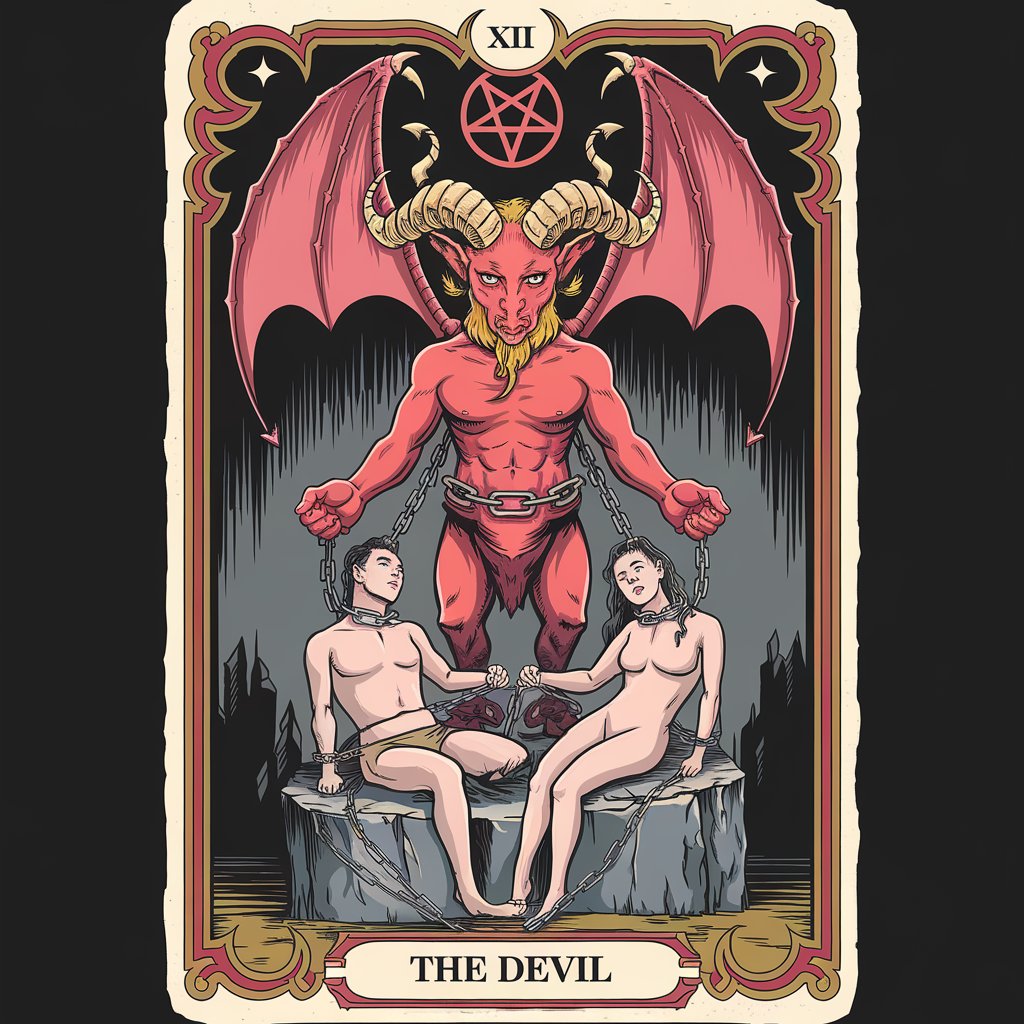
The Devil Tarot Card: Themes and Meaning
The Devil tarot card represents attachment, compulsion, and bondage to limiting patterns, desires, or fears. It exposes where individuals unconsciously trade freedom for comfort, security, or familiarity, even when these attachments restrict growth. Associated with dependency, avoidance, and shadow material, The Devil highlights how people can become bound by habit, fear, or over-identification with roles or routines. At its core, it asks: Where are you allowing limitation or attachment to dictate your choices, and how might you reclaim agency and freedom?
The Peacemaker and The Devil: An Analysis of Their Interaction
When the Enneagram Peacemaker intersects with The Devil tarot card, the dynamic centers on avoidance, attachment to comfort, and subtle self-limitation. Four key interaction points emerge:
1. Attachment to Comfort and Familiarity
Nines often gravitate toward peace and ease, sometimes at the cost of personal growth. The Devil highlights how over-identification with comfort can become a cage, preventing change and self-assertion.
2. Avoidance of Conflict and Uncomfortable Truths
Peacemakers may sidestep confrontation or difficult emotions to maintain harmony. The Devil exposes how this avoidance can reinforce dependence on external circumstances or people, limiting agency.
3. Shadow Identification with Passivity
Nines may unconsciously define themselves by their ability to go along or accommodate. The Devil shows how this identification can bind them to others’ expectations, eroding autonomy and authentic expression.
4. Compulsion to Preserve Peace at Any Cost
Peacemakers can overcompensate to maintain stability, suppressing needs or desires. The Devil highlights the bondage inherent in prioritizing harmony over self-expression, creating subtle chains of restriction.
Summary of the Interaction
Together, the Enneagram Peacemaker and The Devil tarot card illuminate the shadow of avoidance, comfort attachment, and self-imposed limitation. This pairing shows how the pursuit of peace and ease can unintentionally create bondage, constraining autonomy, growth, and authenticity. The lesson for Nines is to discern where comfort or avoidance has become restrictive, integrate their needs with external harmony, and reclaim agency. True liberation arises when calm and connection coexist with conscious engagement and authentic self-expression.
The Devil Reversed: Themes and Meaning
The Devil reversed signifies liberation from bondage, attachment, and fear-driven behavior. Where the upright Devil highlights compulsion, limitation, and unconscious adherence to external structures or internal fears, the reversed card signals awareness, release, and conscious choice. It emphasizes disentangling from limiting patterns, reclaiming agency, and integrating freedom with responsibility. The reversed Devil encourages stepping away from avoidance, attachments, and over-identification with roles or comfort, offering empowerment through conscious engagement and authentic self-expression. At its core, it represents freedom from self-imposed chains and liberation through choice.
The Peacemaker and The Devil Reversed: An Analysis of Their Interaction
When the Enneagram Peacemaker engages with The Devil reversed, the dynamic centers on releasing avoidance, passivity, and unconscious attachment to comfort, enabling the Nine to reclaim agency and authenticity. Four key interaction points emerge:
1. Liberation from Comfort-Driven Passivity
The reversed Devil encourages Nines to loosen reliance on comfort, routine, or avoidance as a defense against discomfort. Autonomy and self-expression become conscious choices rather than unconscious avoidance.
2. Facing Conflict Consciously
Peacemakers often sidestep disagreement to maintain harmony. The Devil reversed highlights the opportunity to engage with difficult truths, setting boundaries and asserting needs without fear.
3. Release from Shadow Identification with Accommodation
Nines may unconsciously define themselves by their adaptability and ability to please. The Devil reversed signals freedom from over-identification with these roles, allowing authentic self-expression and personal agency.
4. Integration of Authenticity with Harmony
The reversed Devil supports balancing inner needs with external connection. Nines can maintain peace without self-suppression, creating relationships and environments based on conscious engagement rather than unconscious avoidance.
Summary of the Interaction
Together, the Enneagram Peacemaker and The Devil reversed depict liberation from self-imposed limitations, avoidance, and attachment to comfort. This pairing emphasizes conscious engagement, authenticity, and the integration of inner needs with external harmony. By releasing passivity, facing conflict thoughtfully, disentangling identity from accommodation, and balancing authenticity with connection, the Nine transforms peace-seeking from a chain into a tool of empowerment and freedom.